
On Saying No
another scene is possible

I walked out of a poetry reading the other day before doing the reading I had been invited to do. It was running late, over an hour late, no one knew what was going on, the scarce bottles of wine were long gone, and the other people there were kids blinged out in mommy’s money. I felt awful there, uninspired, and prisoner to the fallacy that in order to be a ‘successful’ artist I must sell my integrity.
When N and I walked out into the cold streets we giggled and sighed with relief. A small victory – autonomy felt good. We hurried to the closest tube station that would get us home. On the throttling carriage of the Victoria line a darker feeling descended on me. I felt sick of mediocrity. Sick of vacuity. Sick of the circle-jerk that is the art scene in the city where I live.
Over the past couple of weeks I’ve been stewing on this sense that I’m surrounded by people who want to impress on other people the importance of their presence. All they wish to announce is that they are THERE. Were you THERE? I was THERE. Anybody who is anybody was THERE. But when it comes to why they were we all congregated THERE – art, friendship or thinking? Oh, who cares. They were THERE and that’s what matters.
Over a Guinness with C earlier today, he agrees with my sentiment over the despairing state of the scene and says that in his own observations there are some gatherings and events that feel as if an Instagram post had come to life in one room. All these personalities, guffawing over each other, liking each other, reposting each other, commenting an array of emojis at each other. Is this what being an artist is? I despair at the idea of having to suck up to people with clout and money who have enough clout and money to put on events in increasingly swanky galleries and spaces in the city just to be heard.
So then, what happens when you say no?
Going home from the poetry reading I did not read at, I felt vindicated that I had reclaimed my time back. My refusal to indulge, to look past, to bypass, felt political. I don’t have to feel grateful for getting to share my work, especially if the conditions are based on some exchange of nefarious social capital over a genuine base of mutual respect. Not only had I not lost anything – my time, my breath, my words – but I had gained something: self-respect.
I finished Jackie Wang’s Alien Daughters Walk into the Sun over the weekend. It’s a book I hope to carry with me for a long time. Reading it returned me to myself, teeming with possibilities. After finishing a book I really like, I often absorb some of the writer’s style, and writing in the style of Jackie Wang, as I have been on this blog/newsletter recently, has been liberating, emancipatory and engaged. I’ve felt the potential of writing as an emancipatory force, a force for self-emancipation. I sweep a trained, critical eye over the forces at play around me and make an informed decision on how I wish to proceed. In the titular essay, Jackie Wang writes a letter to young women writers of colour addressing the tension when regarding the loci of power, symbolised as the white man, as a writer with a fringe positionality. She describes how this placement, from the ‘outside’ looking ‘in’, may cause contradictory reactions, simultaneously hating the white establishment, where you don’t quite belong, where you have a sense they may be using you for their own validation in the eyes of others, yet seeking its approval most desperately, wanting to walk down its well-trodden lane and claim all of its well-worn accolades as your own. “When you finally become aware of the ugly inner workings of this symbolic economy, nothing will seem real. At this point you will have to decide if you want to play the game or preserve your integrity,” she writes. “You want the power they possess because the only power you have is to create a morality out of not having power, to talk shit about their ways of having power as though you are somehow purer or more innocent.” When I read this, it struck a nerve. This described how I felt about the scene, not entirely as a young woman writer of colour (not all of that identity applies to me) but as someone who has been brushing up against the locus of power and disliking what I saw. But, by the end, Jackie Wang shepherds her disillusioned reader into a lighter state, an alternative state, a state of possibility. She writes, “The more you hate people for winning the game, the more you believe in the game yourself.” The game is only as real as how much faith you put it in.
There’s another way, of course there is, it’s all smoke and mirrors anyway.
In another section of the book, Jackie Wang talks about Jack Halberstam and his ideas around negative feminism and antisocial queer theory. I remember Halberstam from university. I still have that Tracey Moffatt series, Fourth, impressed in my brain, which he talks about extensively in The Queer Art of Failure. All those forgotten Olympians, who came fourth, grazing the podium. Coming fourth bestows you with the most acute sense of failure, more so than coming in at any other place. It’s the almost, the what could have been, the if only. You have to reckon with the ultimate ‘not quite’. So much potential in that almost-ness.
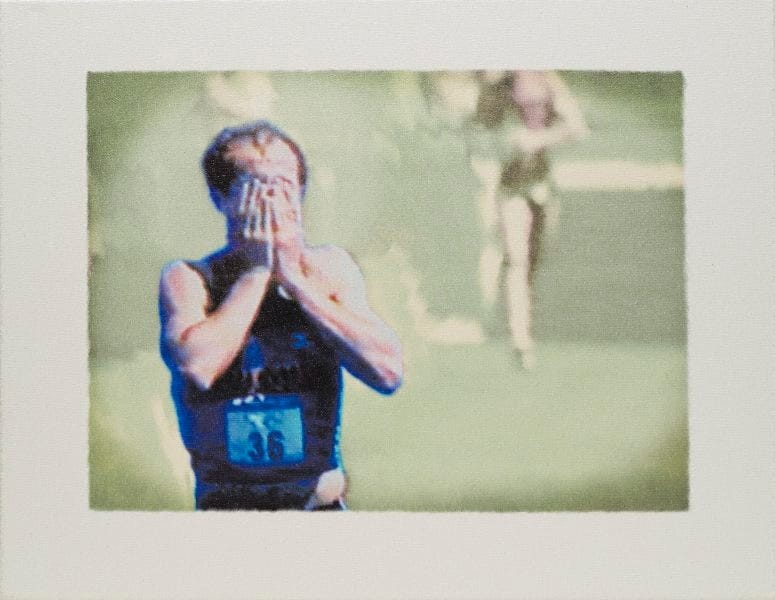
Anyway, Wang engages with Halberstam’s ideas of negative feminism and antisocial queer theory which revolve around decentring productivity, contradicting prevalent narratives of success, and refusing politeness because – why would we be polite in a system so nonsensical, which is constructed with the odds piled against us? Wang considers these ideas, weighing the possibilities offered by “embracing masochism, antiproduction, self-destructiveness, abjection, forgetfulness, punk pugilism, and antisocial attitudes as a form of resistance to the liberal feminist and gay politics of cohesion” versus critiques of this theory that ultimately praise action over passivity. I think, however, there is something very valuable in the refusal to be happy. By refusing, by acknowledging how the system makes you feel like shit, and departing from that shit-feeling, the true power of NO is revealed. It’s the refusal of acknowledging the game which then allows you to circumnavigate participation – it opens up the floor for different subject-positions. The system demands compliance. When we reject, refuse, or don’t engage, we’re opening up the space to create and combat from without the confines of what is demanded and expected. There are politics in refusal, there’s power in failure and there are possibilities in deviance.
Yesterday my friend P came over for dinner. We ate delicious Szechuan style chicken wings and black pepper beef and soft boiled soy eggs and rice that N cooked. Over wine and cigarettes and joints we plotted a different type of future. One that we felt responded to our needs, where we felt cared after, like how it feels to have a long drawn out dinner with friends and wings and wine. This future looks like unwavering support in trying times. It looks like crossed-legged attention and circular protagonism. It looks experimental. It looks full of feelings strong enough to persuade someone into taking action. It looks like poetry. It looks like failure.
As I write this, I feel the coldness of winter all around me. It’s raining all the time and the sun sets at 4pm. But N promises me tenderness when the day has gone dark. By which I mean to say, going forth I’ll be more intentional. Stop flattering. SAY NO. Stay inside and write. Love someone. Build a life.
SAY NO. Stay inside and write. Love someone. Build a life !! 🫂🫂🫂💌💌💌💌
So nice to read what, better put than I could ever have, the way I've been feeling about the lit scene atm. I haven't wanted to read as much because it all feels like an exchange of tokens for a game I'm not fussed by. Love this so so much! xx